House Clearance Southend-on-Sea: Recycling and Sustainability Commitment
Welcome to our sustainability page for House Clearance Southend-on-Sea. As a local house clearance service operating across Southend-on-Sea and the surrounding Essex boroughs, we focus on eco-friendly waste disposal and creating a sustainable rubbish area for residents and businesses. Our approach combines careful on-site sorting, partnerships with local reuse organisations and charities, and an evolving fleet of low-carbon vans to reduce the environmental impact of every clearance.We have set an ambitious recycling percentage target for cleared materials: a 70% diversion rate from landfill within three years of operation, rising to a long-term goal of 80%. To reach this, our team separates recoverable materials at source, identifies items for repair and reuse, and ensures hazardous waste is handled via licensed streams. Every mattress, appliance or piece of furniture is assessed for reuse or safe recycling, and non-recyclable residues are minimised by continuous process improvements and staff training.
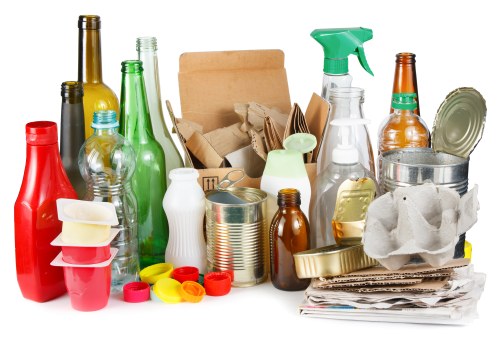
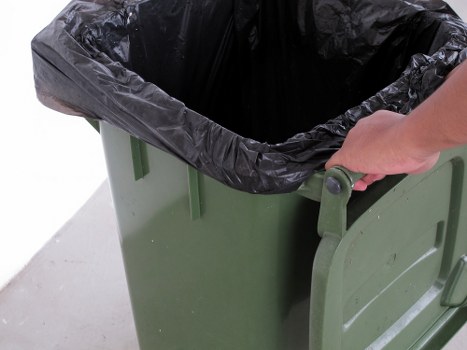 The borough’s approach to waste separation informs our methods — Southend-on-Sea and neighbouring authorities typically encourage separate streams for mixed recycling, food and garden waste, and bulky items collected for reuse. We align with that system by offering a clear sorting process on-site and by maintaining strong ties with local processing centres. Key recycling activities we support include:
- Separation of metal, timber, glass and plastics for recyclable recovery
- Collection and transfer of electrical items to certified WEEE processors
- Donation of usable furniture and household goods to community reuse networks
Local Transfer Stations and Licensed Disposal
We make use of nearby licensed transfer stations and recycling facilities to ensure materials from a Southend house clearance are managed properly. Rather than transporting everything to a single disposal point, we consign materials to specialised centres that accept segregated loads: timber recyclers, metal reclamation yards, electronics recyclers and composting facilities for biodegradable waste. This reduces contamination, improves recycling yields and supports local circular-economy operators.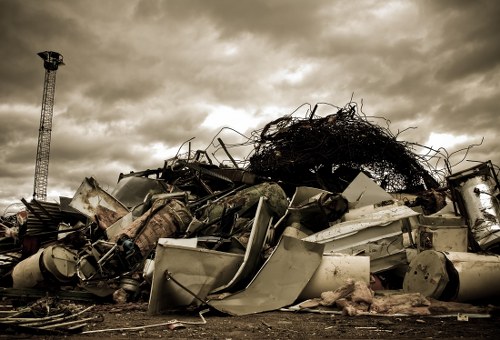 To support these operations we rely on carefully documented chains of custody and waste transfer notes. Using authorised transfer stations in the Essex area and facilities serving the Southend-on-Sea borough allows us to track where each stream ends up and measure performance against our recycling percentage target. We also audit partners periodically to maintain compliance with environmental legislation and industry best practice.
Our logistics focus on low-carbon transport and efficient routing. Low-carbon vans in our fleet include hybrid models and fully electric vehicles where routes allow, and we employ route optimisation software to cut mileage and emissions. Combined with consolidated loads to local transfer stations, this low-emission logistics model helps reduce the carbon footprint of a typical southend house clearance.
Partnerships with Charities and Reuse Networks
We prioritise reuse and social value by partnering with local charities and community reuse centres across Southend and nearby Essex towns. When items are fit for refurbishment — furniture, household textiles, small electricals in working order — we coordinate donations to charity shops and social enterprises that restore and resell items, creating benefits for local people and diverting usable goods from the waste stream.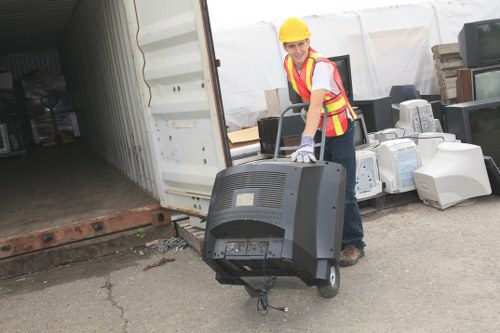 Our charity partnerships are structured to be practical and transparent: we segregate donations at collection, issue donation lists to receiving partners, and support select reuse projects such as community furniture stores and employment-training workshops. These collaborations reduce waste, help vulnerable households and extend the life of good items. We also support small-scale upcycling initiatives by local craftspeople who can turn otherwise discarded materials into new products.
 Sustainable rubbish area management is a key part of what we do. For multi-occupancy properties and larger clearances we install temporary, clearly labelled containment zones so tenants and contractors can separate streams easily. This reduces cross-contamination, speeds up recycling at transfer stations and helps us report accurate data on recycled and reused tonnage — information we use to improve performance against our 70–80% recycling goal.
Our commitments include:
- Clear on-site sorting to maximise material recovery
- Partnerships with charitable reuse partners for social value
- Low-carbon transport and route optimisation to cut emissions
- Transparent waste documentation and auditing of transfer stations
As a dedicated provider of house clearance in Southend-on-Sea and surrounding boroughs, we continually review emerging recycling technologies and local council policies to refine our services. Our goal is to make sustainable house clearances the default choice for households and businesses: practical, accountable and environmentally responsible.
Choosing our southend house clearance service means choosing a partner committed to sustainable rubbish management, local charity support and measurable recycling targets. Together with residents, councils and community organisations we can keep valuable materials in use and reduce the environmental impact of clearances across the borough.
